Ian Urbina is the director of The Outlaw Ocean Project, a non-profit journalism organization based in Washington D.C. In this column, In this column, he writes about his investigation into human rights abuses tied to the global seafood industry.
More of Ian's columns


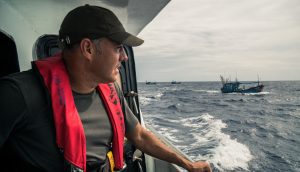
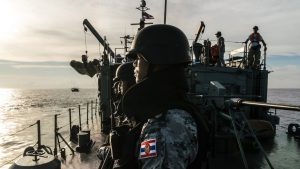
Experts I talked to said that when it occurs at sea, beriberi often indicates criminal neglect because it is so easily treatable and avoidable.
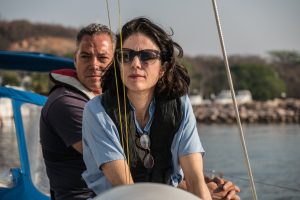
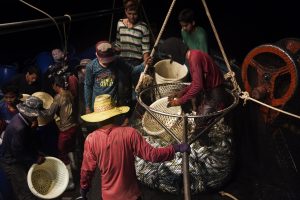
As the head of the Outlaw Ocean Project, I was part of a team of reporters conducting a broad investigation of working conditions, human-rights abuses, and environmental crimes in the world’s seafood supply chain. Because the Chinese distant-water fishing fleet is so large, so widely dispersed, and so notoriously brutal, we made that fleet our focus. We boarded their ships all around the world and our visits revealed in stark detail a broad pattern of human rights and labour abuses. Debt bondage, wage withholding, excessive working hours and beatings of deckhands are common – as is beriberi, which was one of the first signs of problems that we observed during many of our encounters.
Beriberi is caused by deficiencies in vitamin B1 and often induced by diets consisting mainly of foods such as white rice, instant noodles, or wheat flour. Symptoms include difficulty breathing, lethargy, chest pain, dizziness, confusion, and severe swelling. Like scurvy, beriberi was common among 19th-century sailors. It also has a history in prisons, asylums, and migrant camps. For a long time, nobody understood the cause of the disease, which would only be identified in the 1930s, when scientists linked it to a deficiency of the vitamin. Today beriberi is avoidable and easily reversed. Some countries (though not China) mandate that rice and flour be supplemented with B1. The illness can also be treated with vitamins, and, when B1 is administered intravenously, patients typically recover within 24 hours.
Yet still, beriberi is killing an untold number of fishermen and sailors each year. Experts I talked to said that when it occurs at sea, beriberi often indicates criminal neglect because it is so easily treatable and avoidable. So why does it still happen?
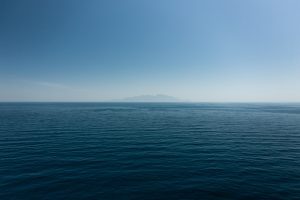
Many of the men who serve as crew on Chinese ships are, in effect, captives engaged in forced labour. We interviewed more than four dozen of them and found that many had contracts obligating them to stay at sea for extended periods, sometimes spending more than three years without seeing land. That’s three years at sea, without returning to land, not three years just as a crew member. Why so long? The main reason is the industrial and global way that seafood is now harvested, transported, and processed. As near-shore fish stocks have collapsed, fleets – especially the huge Chinese fleet – have begun travelling further and staying at sea longer in hopes of maximising their haul. This trend is facilitated by a popular system called ‘at-sea trans- shipment’, where ship captains avoid coming to shore and instead offload their catch to refrigeration ships in the middle of the ocean. Two to three years is now a common amount of time for crew aboard Chinese distant-water fishing vessels to spend at sea.
Not surprisingly, these vessels are rarely stocked with enough fresh vegetables to keep crew members healthy. Typically for long trips they stock rice and instant noodles, which are cheap, calorie-rich, and slow to spoil. The vegetables, fruit, and meat eaten on these ships tends to be canned or dried, making them low in B1 and other nutrients, and high in salt, sugar, and preservatives. Ship cooks also frequently mix rice or noodles with raw or fermented fish, and they supplement meals with coffee and tea, all of which are high in an enzyme called thiaminase, which destroys B1. An additional problem is that the body requires more B1 when carbohydrates are consumed in large amounts and during periods of intense exertion, both of which are conditions that prevail on distant-water fishing vessels.
On one Chinese ship that we boarded while it was fishing in the Pacific Ocean, the cook told us that his ship had no fresh fruits or vegetables at all. On another Chinese vessel, located on the South Atlantic Ocean, north of the Falkland Islands, a deckhand in the mess hall, where the workers eat, gestured toward a bag of rotten and blackened cabbages and onions, the only vegetables on the ship. Since beriberi tends to be painful and slow- acting, victims typically see it coming before it kills them. On a trip to Jakarta, Indonesia, in 2020, we met a half dozen young men who told us about an outbreak of beriberi in 2019 on a Chinese squid ship called the Wei Yu 18. One member of their crew died because the captain refused to bring him to shore, even when he begged to return home.
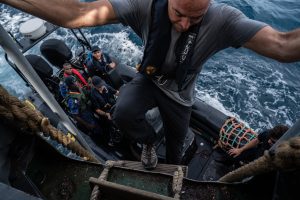
We learned of many similar stories during our investigation. Captains often refuse to carry sick or injured crew back to shore because of the time and expense required to do so. It can also be difficult to transfer sick crew members to other boats, because swells make it dangerous for large ships to get close to each other, and most fishing ships don’t have small skiffs to traverse the water between vessels.
Chinese ships are not the only ones with crew dying from beriberi. When the Thai government researched a 2016 outbreak on two trawlers in its fleet, both of which had stayed at sea for at least nine months, it found that the ships carried 32 crew with beriberi, some of whom were Cambodian and victims of forced labour. Six other crew members had died earlier from the disease, their bodies thrown overboard at sea. In its report, the Thai government recommended that all fishing companies should be required to provide B1 supplements to crew on ships that stay away from shore longer than 30 days.
This type of captivity and neglect is not a far-away problem. They are indicators of a larger set of indefensible practices that long-haul fishing captains are engaging in as they roam the high seas and harvest fish at an industrial scale in order to satisfy our ever-growing demand for seafood. The products of these crimes are ending up on our store shelves.
More of Ian's columns
Experts I talked to said that when it occurs at sea, beriberi often indicates criminal neglect because it is so easily treatable and avoidable.
Continue reading
This story is exclusively for Oceanographic subscribers.
