Coral symbiosis
From rising sea temperatures and ocean acidification to crown-of-thorns starfish outbreaks, coral reefs in Southeast Asia are in peril. Photographer Giacomo d’Orlando travelled to the region to document various local research and restoration projects that have one united desire: to help bring back coral reefs to their former glory.
Coral reefs are some of the most diverse ecosystems on the planet. They’re home to numerous fish species, invertebrates, and other marine life, while being crucial for maintaining the health and balance of the ocean. As well as generating half of the earth’s oxygen, the ocean absorbs more than 25% of all carbon dioxide emissions and captures an estimated 91% of the excess heat generated by these emissions. Human activities and greenhouse gas emissions are causing substantial changes in this delicate environment. As temperatures rise around the globe, the oceans also heat up. While heating oceans are nothing new, there is a different, less discussed phenomenon associated with the rising concentration of carbon dioxide in the atmosphere: ocean acidification.
Ocean acidification describes a process in which the ocean’s pH levels decrease as they absorb the excess of carbon dioxide or CO₂ from the atmosphere that is primarily caused by human activities such as the burning of fossil fuels. Acidification is causing a significant change in the sea that affects its fundamental chemical balance. The lower pH in the ocean water can create an ‘osteoporosis effect’ that diminishes minerals in the water. These minerals are commonly used by coral reefs, oysters, clams, lobsters, shrimp and other marine life to build their shells and skeletons. Weakening their structures, acidification makes it harder for these organisms to survive, thereby threatening the entire marine food web.
Rising sea temperatures can further impact the sensitivity of corals to stressors, making them more vulnerable to coral predators like the crown-of-thorns starfish (COTS). A voracious predator of coral polyps, the species can cause considerable damage to reefs when their populations surge. While their presence is a natural part of coral reef ecosystems, certain conditions such as ocean acidification can lead to population explosions which devastate coral reefs by consuming vast amounts of live coral, leading to significant degradation of reef structures.


This feature appears in ISSUE 34: SCOTTISH SEAS of Oceanographic Magazine
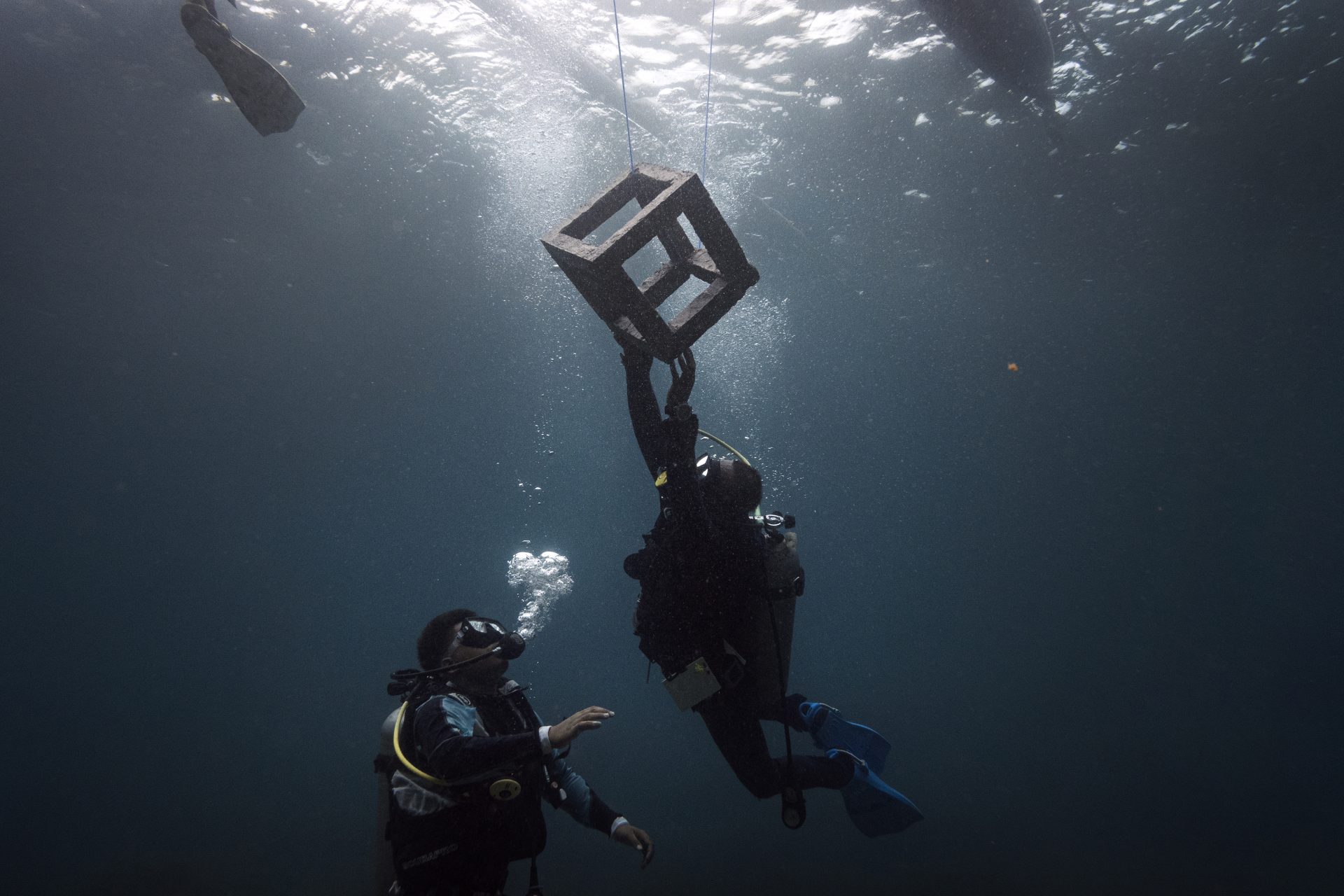
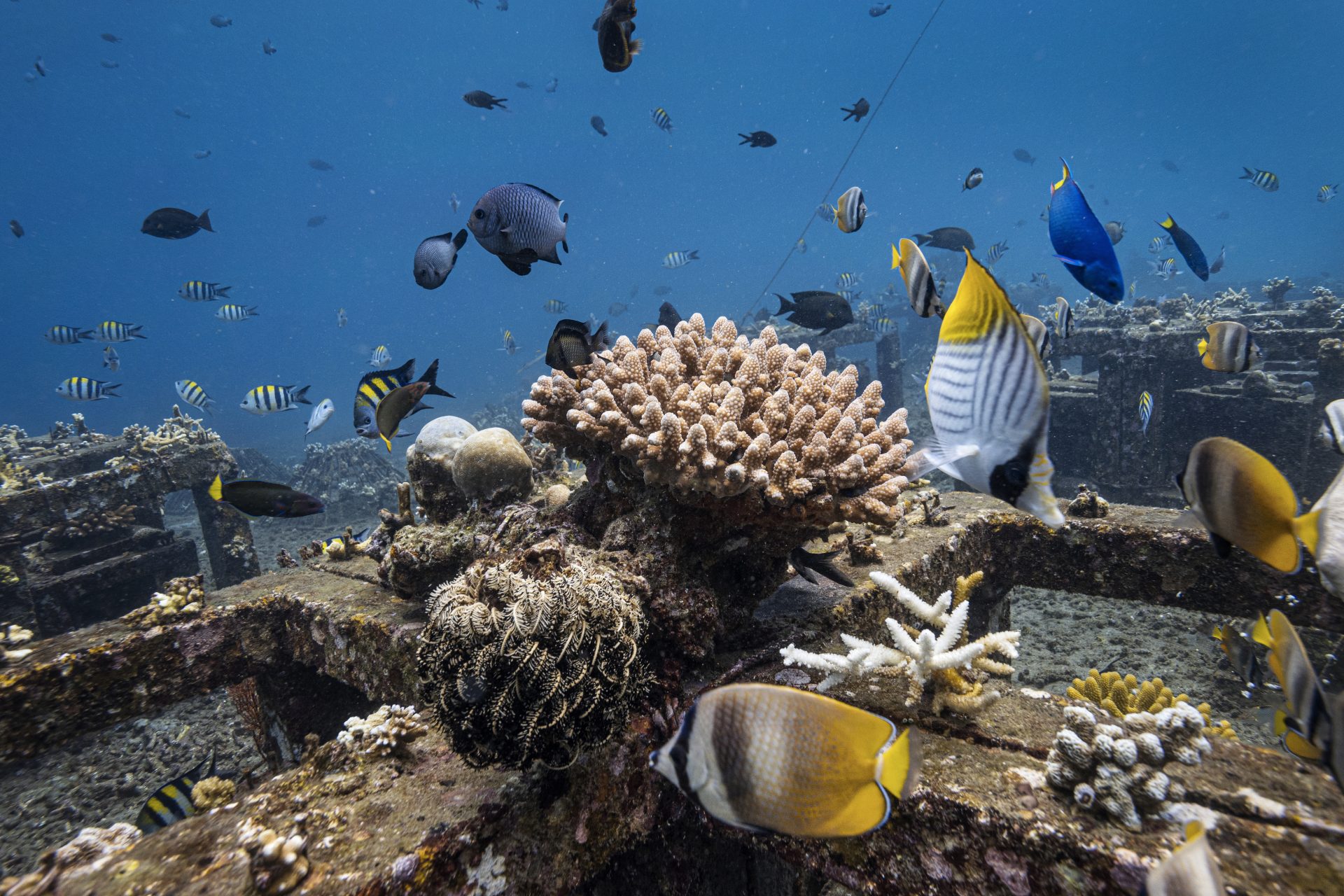
In combination with anthropological stressors such as nutrient pollution from agricultural run-off, the related phenomena of eutrophication or hypoxia can harm coral reefs. Eutrophication occurs when excessive nutrients, particularly nitrogen and phosphorus, enter coastal waters. These nutrients stimulate the rapid growth of algae and phytoplankton, creating algal blooms. When these blooms eventually die and decompose, it depletes the water of oxygen, creating dead zones or hypoxic areas in which most forms of marine life can’t survive.
In Southeast Asia, an area which the Intergovernmental Panel on Climate Change (IPCC) has classified as one of the regions most vulnerable to climate change, with Thailand and Indonesia in the top 10 most affected countries, the health of marine and coastal ecosystems is in particularly serious decline. In March 2022, I embarked on a journey to visit those places to better understand the complex threats these delicate ecosystems are facing in an ever-changing world.
In Hat Yai, a city in Thailand’s far south near the Malaysian border, I visited the laboratories of MACORIN, the Marine and Coastal Resources Institute at Prince of Songkhla University. Here I met with Dr. Mathinee Yucharoen’s team which is studying the behaviour of corals in hypoxic scenarios. “We are captivated by the beauty and diversity of corals and the ecosystems they support,” she said. “We have a strong desire to learn more about reefs and we are deeply concerned about the threats facing these fragile habitats. We feel a sense of responsibility to protect them for future generations.”
Continue reading
This story is exclusively for Oceanographic subscribers.
This feature appears in ISSUE 34: SCOTTISH SEAS of Oceanographic Magazine